



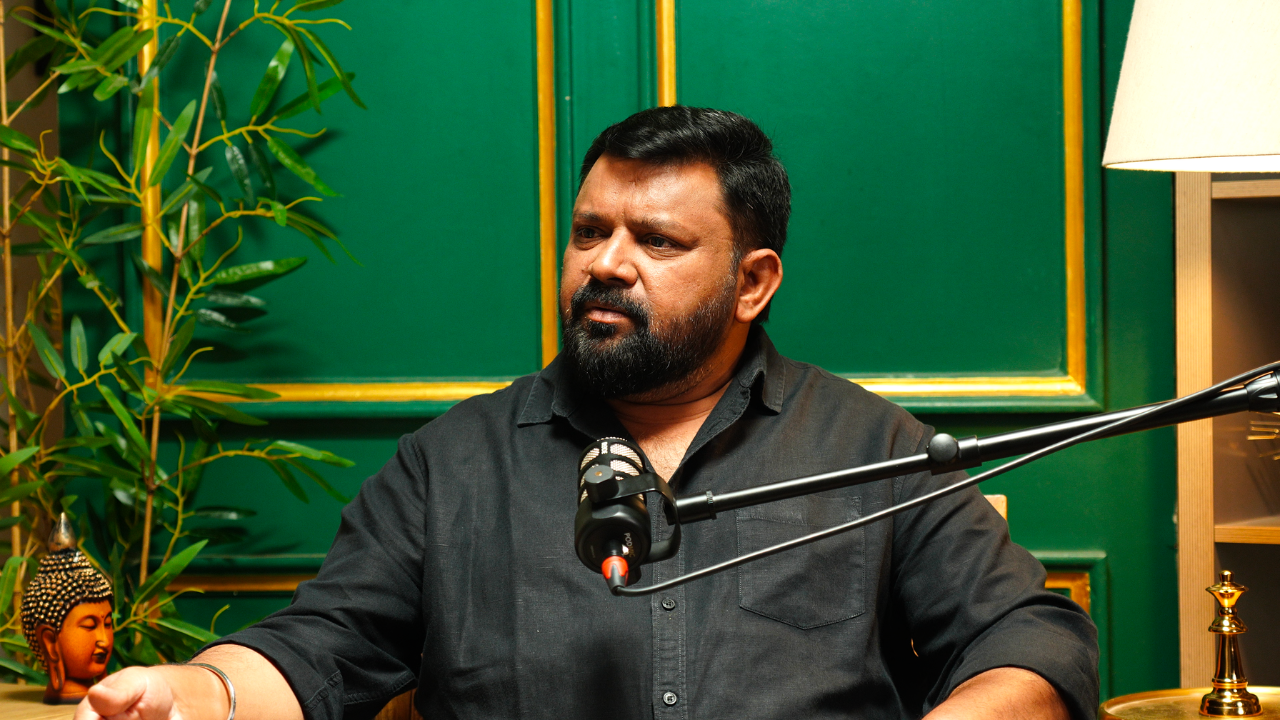
After spending over two decades at the centre of some of Tamil television’s most intense conversations, Gobinath reflects on power, love, marriage, parenting, generational change and the difficult art of understanding another human being.
For more than two decades, Gobinath has stood in the middle of arguments.
On Neeya Naana, he has listened to people debate marriage, parenting, money, gender, ambition, family, social expectations and changing values. He has witnessed anger, embarrassment, vulnerability, prejudice, reconciliation and, occasionally, a moment of truth that changes the direction of an entire conversation.
The popular image of Gobinath is that of the articulate moderator who knows when to question, interrupt, challenge and summarise. But behind that familiar television presence is someone who believes that listening to people for twenty years has changed him as much as it may have changed his audience.
“I am the first student of Neeya Naana,” he says.
It is an unusually revealing way to describe his relationship with the programme. For Gobinath, the show is not merely a platform on which he presents conclusions. It is a space in which his own certainties are repeatedly tested.
Many of the ideas he now speaks about, he says, were not theories he arrived with. They came from ordinary people who walked into the studio carrying their experiences.
“Relationships may disappoint you, but eventually it is a relationship that stands by you. You may believe that human beings are terrible, but ultimately, it is another human being who saves you.”
That belief appears to be at the heart of his worldview.

The Human Search for Power
Asked what life beyond forty has taught him, Gobinath begins not with age, success or maturity, but with power.
He believes that human beings spend much of their early lives trying to understand where their power lies. As children, power can mean getting the first turn to bat or receiving the first dosa from the pan. During adolescence, it may mean opposing a dominant parent. Later, education, employment and money begin to look like sources of independence and authority.
Marriage introduces another negotiation: Who controls the home? Who makes the decisions? Whose preferences matter more?
But over time, Gobinath observes, the meaning of power begins to change. When children arrive, when financial difficulties emerge, or when one partner stands beside the other through illness and uncertainty, the competition for control slowly loses its importance.
Responsibility begins to replace authority.
The need to dominate gives way to the need to protect.
Gobinath’s description of love is characteristically unsentimental: “Love is not merely about expressing affection. Sometimes, love means reaching a point where you are simply unable to hate the other person.”
It is not the cinematic idea of love. It is the everyday love of two people who may still be angry with each other, but remember to place a tablet next to the other person’s dinner plate. It is built not only through romance, but through accumulated acts of support, loyalty and care.
Why Complete Understanding May Not Be the Goal
Modern relationships often place enormous importance on being understood. Partners are expected to recognise every emotion, anticipate every need and respond in exactly the right way.
Gobinath questions whether complete understanding is either possible or even desirable.
“A human being does not react only from character,” he points out. “A reaction may come from the situation, the emotional state of that moment, something that happened earlier that day, or even something the person has just watched.”
To define an entire person through a single reaction, therefore, is to ignore the complexity of human behaviour.
He also offers a more provocative thought: perhaps a little incompleteness is what keeps relationships alive.
Couples who have spent decades together may still say, “I can never fully understand this person.” To Gobinath, this is not necessarily evidence of a failed relationship. It may be an acceptance that no individual can be reduced to a predictable set of behaviours.
Trying to understand another person is important. Insisting that we have understood them completely can become a form of ego.
People change. Situations change. The same person may respond differently at another point in life. A good relationship, therefore, may not be one in which both partners have completely decoded each other, but one in which they remain willing to rediscover each other.
The Courage to Be Vulnerable

Public life rewards the appearance of confidence. People who seem knowledgeable, composed and emotionally strong are often admired. But maintaining that image can become exhausting.
For Gobinath, real courage lies somewhere else.
“The greatest courage is to be able to put your guard down,” he says.
The ability to display knowledge, physical strength or authority does not impress him as much as the ability to be vulnerable before someone we trust.
To surrender emotionally to another person requires a series of difficult assurances: Will this person judge me? Will this be shared with someone else? Will my vulnerability be used against me later?
If there is even one person before whom we can be completely unguarded, Gobinath considers that a form of success. That person may be a spouse, friend, sibling, cousin or relative. Their designation is less important than the safety they provide.
In a culture increasingly concerned with projecting the right image, this understanding of success feels both simple and radical. A successful life is not only one that appears strong from the outside. It is also one that contains at least one relationship in which strength is no longer necessary.
Being Neutral Does Not Mean Being Indifferent
For years, viewers have associated Gobinath with neutrality. As the moderator of a debate, he is expected to create space for opposing positions. But he is careful to distinguish neutrality from moral indifference.
According to him, forcing oneself to remain neutral in the face of obvious injustice can itself become unjust.
The real discipline of moderation is not to erase one’s conscience. It is to prevent the personal Gobinath from overtaking the responsibility of the anchor.
There are moments, he admits, when he becomes angry while listening to an argument. Like any viewer, he may instinctively feel that someone deserves to be sharply criticised. But the person standing before him is speaking from a particular life, background and emotional reality. His responsibility is to understand that reality without automatically endorsing it.
This is where Gobinath draws another important distinction: the difference between what is right and what is good.
Imagine a relative who has spoken badly about you arriving at your home with a wedding invitation. Refusing to welcome him may appear logically justified. Yet inviting him inside may be the better human choice. Perhaps he has come to repair the relationship. Perhaps he has set aside his ego, even momentarily.
Being right can protect our position. Choosing what is good may protect a relationship.
For Gobinath, maturity lies in recognising that the two are not always the same.
Every Generation Thinks the Next One Is Wrong
Few subjects expose generational anxiety as clearly as conversations about Gen Z. They are frequently described as impatient, easily distracted, less loyal and unwilling to make sacrifices.
Gobinath is wary of this broad dismissal.
Every generation, he says, is a reflection of the social environment in which it grows. A generation born into technology will not be excited by the things that amazed its parents. Young people raised in an age of instant information will naturally expect speed, access and quicker results.
Their preference for personal choice over traditional ideas of position and status is not an accidental defect. It is partly the result of the opportunities created by earlier generations.
Parents cannot provide their children with greater freedom, exposure and security, and then complain that those children do not think like them.
“The fact that they are not like us is their strength,” Gobinath says. “If they have to be exactly like us, we may as well create clones of ourselves.”
This does not mean that every choice made by a younger person is automatically correct. It means that conversations across generations cannot begin with superiority.
Gobinath sees value in listening to his own daughter’s understanding of the world. In areas such as technology, she often explains new concepts with greater ease and clarity. For a parent, accepting that a child may know something better requires humility. But it also creates a healthier relationship—one in which knowledge does not flow in only one direction.
The older generation has experience. The younger generation has access to a new world. Both have something to teach, and both have something to unlearn.
Nostalgia Is Rarely Just About Music
Even arguments about music, Gobinath observes, are often arguments about identity.
When someone insists that the songs of their generation were superior, they may not be defending music alone. A song carries an entire period of life with it: a person they once loved, a journey they remember, a youthful dream, a private loss or an emotion they never expressed.
People are not always protecting a composer or a musical style. They are protecting the memories attached to it.
This explains why generational disagreements can feel so personal. What appears to be a disagreement about songs, clothes, work culture or relationships may actually be a defence of one’s own life and the choices made within it.
Understanding this does not end the disagreement, but it makes the disagreement kinder.
Listening Without Judging
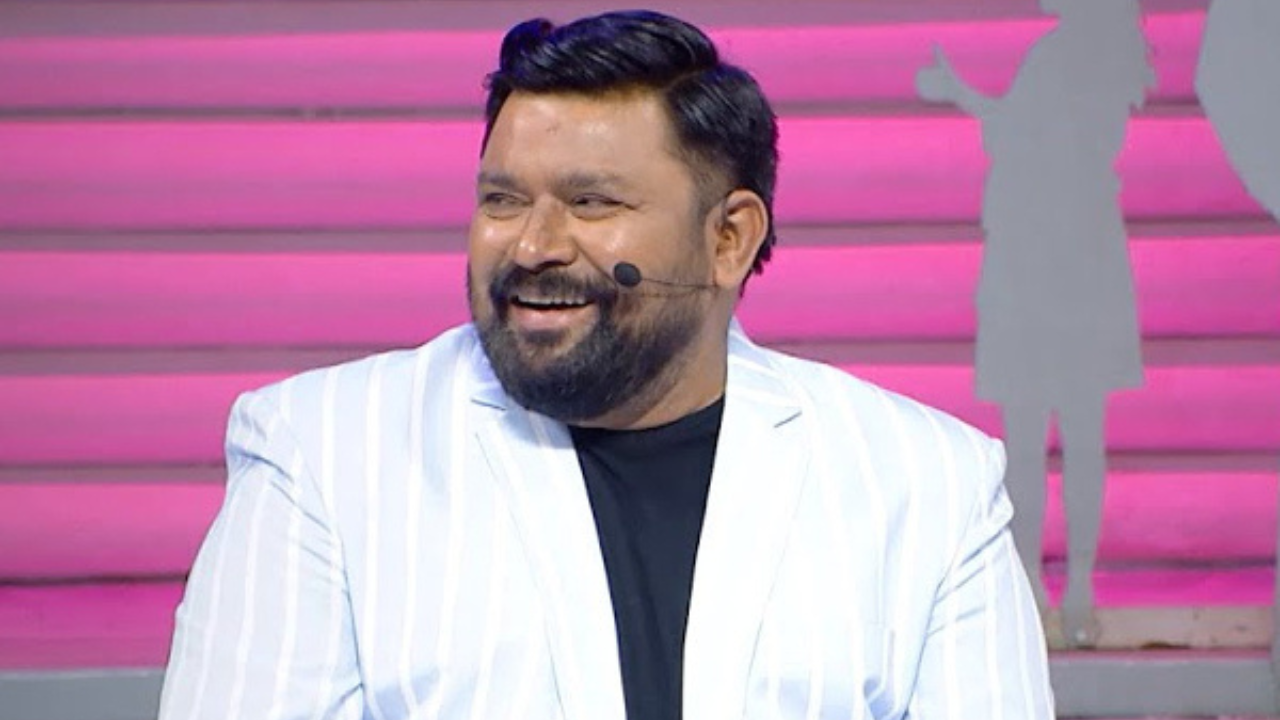
One of the enduring contradictions of Neeya Naana is that the programme is built around opposing opinions, yet its most memorable moments often occur when an opinion gives way to an experience.
A person who initially appears unreasonable may reveal the fear behind their anger. Someone judged as selfish may describe a life in which self-preservation was necessary. A parent, spouse or child may say something that forces the audience to reconsider an easy conclusion.
These moments seem to have shaped Gobinath’s approach to people.
He does not argue that every perspective is correct. Nor does he romanticise harmful behaviour. His interest lies in discovering the lived experience from which a belief emerges.
This is perhaps why his questions often move beyond “What do you think?” to “What happened to make you think this way?”
Judgment concludes a conversation. Curiosity keeps it open.
After twenty years of listening, Gobinath appears less interested in offering perfect answers than in asking questions that expose the assumptions behind our answers.
“The Purpose of Life Is to Live”
When asked whether he has spent time searching for a grand purpose in life, Gobinath’s answer is unexpectedly direct.
“The very purpose of life is living.”
Achievement, recognition, ambition, competition and the desire to prove oneself all come later. One may win or lose, live with ego or learn to let go of it. But life should not become a project conducted entirely for the approval or defeat of someone else.
This does not make Gobinath indifferent to ambition. He continues to work, learn and push himself into unfamiliar spaces. What has changed is the origin of the ambition.
In earlier years, dreams could be powered by the desire to answer those who had underestimated or humiliated him. Today, he says, he would rather build his dreams from gratitude—from recognising what life has already given him and asking what more can be created from it.
It is a quieter form of ambition, but perhaps a more sustainable one.
Still Willing to Be Surprised
Despite years of experience, Gobinath does not speak as someone who believes he has completely understood society. In fact, his strongest ideas seem to begin with the acceptance that people will continue to surprise him.
That may be the real reason for his longevity as an interviewer.
The technique of asking questions can be learnt. The ability to remain curious after thousands of conversations is harder to preserve.
Gobinath’s journey offers no neat formula for relationships or social harmony. Instead, it leaves us with a set of useful tensions.
Being neutral does not mean ignoring injustice.
Being right does not always mean being good.
Love does not eliminate anger.
Understanding someone does not mean defining them forever.
Parents do not lose authority when they learn from their children.
Vulnerability is not the opposite of strength.
And listening is not a passive act. Done honestly, it can disturb our certainties, expose our prejudices and change the person asking the questions.
For over two decades, Tamil audiences have watched Gobinath listen to people.
What may be less visible is how deeply those people have taught him to listen again